Discovering the North Sea
The North Sea is a shallow, historically freighted body of water that sits between Great Britain and continental Europe, linking ports from Norway and Denmark down to the Netherlands, Germany and the UK. For mariners and travelers, it is a corridor of contrasts: rugged Norwegian fjord approaches in one itinerary, the lowland ports of northern Germany and the Netherlands in another, and the windswept Scottish and English coasts elsewhere. Weather is a defining trait — seasons matter, with summer offering calmer conditions and long daylight, and shoulder seasons bringing more brisk seas and active weather. The North Sea’s maritime heritage is palpable in port towns: fishing fleets, lighthouses, offshore platforms and seafarer museums. For cruise routes between Scandinavia and Britain, the North Sea often provides both scenic transits and efficient connections, while ferry and tidal regimes can shape port arrival/departure times. Culturally, the sea binds shared trade histories and Viking routes with centuries of coastal exchange, and modern cruise itineraries use the North Sea to stitch together very different coastal cultures into a single voyage.
Discovering the Kiel Canal
The Kiel Canal (Nord-Ostsee-Kanal) is one of the world’s busiest artificial waterways, cutting across northern Germany and shortening the passage between the North Sea and the Baltic. Opened in the late 19th century and modernized many times since, it saves ships a lengthy detour around Denmark’s Jutland peninsula and is engineered with locks, bridges and careful traffic control. For passengers, transiting the Kiel Canal is a quietly fascinating experience: banks lined with fields and small towns glide by, service bridges and swing bridges open to accommodate ships, and local traffic (cyclists, walkers) often gathers where the canal intersects roads. Transit time varies with traffic and scheduling but is generally predictable; the canal operates 24/7 and can handle a continuous flow of commercial and passenger vessels. Watching the sequence of operating bridges and the gradual change from estuarine to inland landscape is a unique day at sea and a photographer’s delight for low, intimate coastal scenes rather than open-ocean vistas.
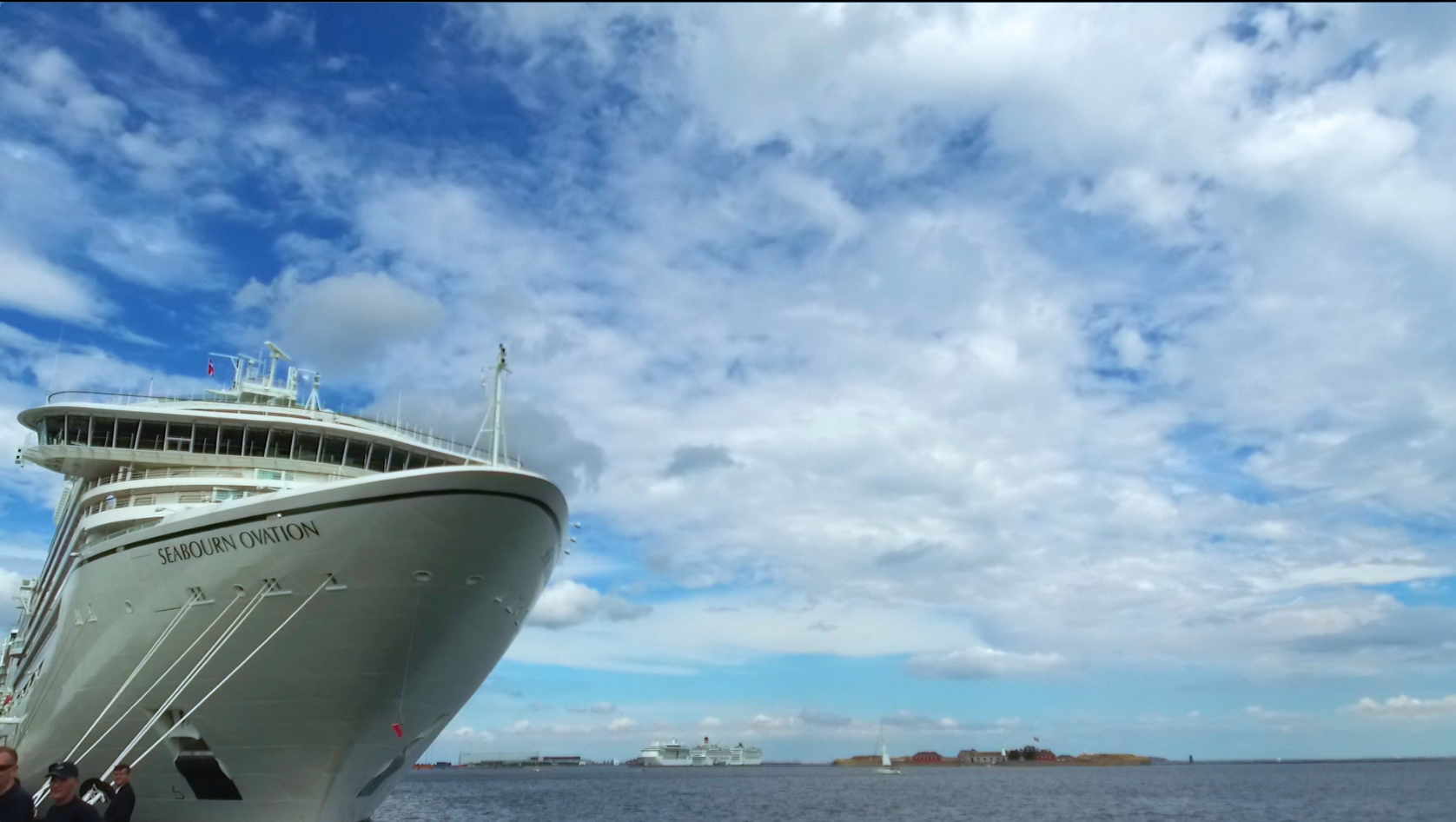
Aboard the Seabourn Ovation
Seabourn Ovation is a modern ultra-luxury ship in Seabourn’s small-ship fleet, designed to combine contemporary public spaces with a high level of service and culinary options. Suites are predominantly veranda suites, well proportioned with sitting areas, walk-in closets and marble bathrooms; many top suites include private verandas with expansive outdoor living space. Ovation’s public areas are stylish yet intimate: forward observation lounges with panoramic glass, a refined main dining room, casual poolside options and several lounges for music and conversation.
Culinary offerings include Seabourn’s signature multi-venue dining program and, notably, The Grill by Thomas Keller — an upscale steakhouse concept available on Seabourn ships. Enrichment programs vary by itinerary and commonly feature local lecturers, musical performances, and thematic briefings tailored to Scandinavian and British cultural contexts. The ship’s spa and wellness facilities are contemporary, with treatment rooms, thermal suites and fitness classes.
For Scandinavia & Scotland itineraries, Ovation’s strengths are its observation spaces (good for coastal watching in the North Sea and skirting fjords), comfortable suites for cooler climates (excellent insulation and verandas with operable doors for crisp sea air), and the capacity to carry a high level of guided shore programming including small-group excursions. Service on Ovation is discreet and individualized; crew members often facilitate special requests and coordinate with local partners for onshore logistics.
Operationally, Ovation is compact enough to use smaller northern European ports yet large enough to host varied onboard programming — a practical balance for voyages that alternate between cosmopolitan cities and remote coastal villages. Its refined onboard tone and emphasis on culinary experiences make it especially appealing for travelers who want an elegant base from which to explore both Scandinavian design and Scottish history.
Cruising with Seabourn
Seabourn attracts discerning travelers who want small-ship luxury, curated shore programs, and a calm onboard atmosphere. In Scandinavia and Scotland, the ideal Seabourn guest appreciates cultural depth (Viking history, design museums, whisky culture), comfortable public rooms for chilly coastal days, and excursions that privilege small groups and expert guides.
Scandinavian passengers often expect design sensitivity and understated service — qualities Seabourn offers — and for Scottish calls, guests relish history, dramatic coastal landscapes and culinary traditions (seafood, hearty fare, whisky). Seabourn’s shore excursions typically include expert local guides and smaller group sizes, giving guests a richer, more contextual experience ashore compared with mass tourism options.
The practical advantages of Seabourn on North Sea and Kiel Canal-adjacent routes include the ship’s ability to call at smaller harbors and the line’s experience operating in northern Europe — itineraries that mix capital cities (Oslo, Copenhagen), UNESCO towns and scenic coastal calls. The ship’s onboard briefings and local cultural programming help passengers make sense of regional complexity — from Nordic social systems to British maritime history — while service and cuisine make returning to the ship a pleasure after long days exploring rain-prone coasts. If you prize low crowds, high service, and cultural depth on an itinerary that alternates between cosmopolitan and remote, Seabourn is a very good match.
Guide to Scandinavia & Scotland Ports
Inverness, Scotland
Inverness, the “capital of the Highlands,” charms travelers with its blend of history, culture, and dramatic landscapes. From the cruise pier at Invergordon, most visitors head straight to Loch Ness in search of its legendary monster. Even if “Nessie” doesn’t appear, the loch’s deep, moody waters and the ruins of Urquhart Castle make the trip worthwhile.
Back in Inverness, the compact city offers a pleasant riverside walk along the River Ness, connecting Inverness Castle with St. Andrew’s Cathedral. Victorian Market and the local pubs provide a dose of Highland hospitality — whisky tastings are a must.
Tips: Book a small-group tour if you want to combine Loch Ness with a whisky distillery visit. The weather changes quickly, so bring a waterproof jacket. For those staying in town, the walk up to Inverness Castle rewards with panoramic views over the Highlands.
Shetland Islands, Scotland
The Shetland Islands, Scotland’s northern frontier, feel both remote and welcoming. From the capital, Lerwick, travelers discover a rugged coastline dotted with seabirds, seals, and Shetland ponies. Cruisers often join excursions to Jarlshof, an archaeological site showcasing 4,000 years of history, from Neolithic settlements to Viking ruins.
The islands also charm with local crafts — Shetland wool knitwear is world-renowned — and maritime traditions. Birdwatchers flock to Sumburgh Head to see puffins in season, while walkers enjoy clifftop trails with dramatic views over the North Atlantic.
Tips: Dress warmly, even in summer — winds can be bracing. Wildlife excursions are best booked early, as spots are limited. Lerwick’s waterfront has small shops and pubs, perfect for a low-key wander if you’d rather stay close to the ship.
Arendal, Norway
Arendal, on Norway’s southern coast, offers a slice of Scandinavian charm with a maritime soul. Its colorful wooden houses line the harbor, while the lively town center invites exploration on foot. The Gothic Trinity Church towers above the main square, and small cafés spill onto cobbled streets.
Nature lovers will appreciate boat tours through the surrounding skerries — small rocky islands that create a scenic labyrinth along the coast. Summer festivals often bring music and art to the streets, adding vibrancy to this seaside stop.
Tips: Wear walking shoes for Arendal’s hilly streets. Take a harbor boat excursion if you’d like a different perspective of the town and coastline. For a quiet escape, walk up to Høyås viewpoint for panoramic views of the islands and town below.
Oslo, Norway
Sailing into Oslo through the Oslofjord is a highlight itself — a serene passage lined with forested islands and red-painted cottages. Once ashore, travelers discover a city that blends modern design with deep-rooted history.
The Viking Ship Museum showcases remarkably preserved longships, while the Munch Museum celebrates Norway’s iconic painter. Vigeland Park, filled with hundreds of expressive sculptures, is another must-see. The modern waterfront development at Aker Brygge offers stylish dining and shopping with fjord views.
Tips: Buy an Oslo Pass for free transport and entry to many attractions. For something off the beaten track, hike up to Holmenkollen Ski Jump for sweeping city views. Summer evenings are long and light, perfect for lingering along the harbor promenade with fresh seafood.
Gothenburg, Sweden
Gothenburg, Sweden’s second-largest city, feels approachable and relaxed. Its leafy boulevards, canals, and neoclassical architecture reveal Dutch influences, while its modern spirit comes through in innovative dining and lively culture.
Cruise travelers often start in Haga, the old district lined with cafés and boutiques — a cinnamon bun from Café Husaren is practically a rite of passage. The Liseberg amusement park entertains families, while boat trips through the archipelago showcase Sweden’s coastal beauty.
Tips: Gothenburg is best explored by tram — pick up a day pass for easy mobility. Don’t miss the fresh seafood at Feskekôrka (“Fish Church”), a market hall beloved by locals. If time allows, a boat tour of the southern archipelago offers an unforgettable glimpse of island life.
Copenhagen, Denmark
Copenhagen blends historic charm with contemporary cool. From the cruise port, it’s a quick ride to Nyhavn, the postcard-perfect harbor lined with colorful townhouses and lively cafés. The Little Mermaid statue remains a must-see photo stop, though travelers often linger longer in Tivoli Gardens, one of the world’s oldest amusement parks.
The city is cyclist-friendly, and renting a bike is an excellent way to cover ground — from the Royal Palace at Amalienborg to the trendy shops and eateries of Nørrebro. Food lovers will find Copenhagen a culinary capital, with everything from world-famous fine dining to smørrebrød (open-faced sandwiches) in casual cafés.
Tips: Copenhagen is walkable, but biking saves time and feels authentic. Book popular attractions like Tivoli and Rosenborg Castle in advance if visiting in summer. For a unique view, take a canal tour — the city reveals another layer of charm from the water.
Edinburgh (Leith), Scotland
Edinburgh’s cruise berth at Leith places you within easy reach of the Scottish capital’s medieval and Georgian treasures. The Royal Mile, Edinburgh Castle and the charming closes of Old Town are all must-sees; the city also offers robust whisky bars and literary history (think Burns and Stevenson).
Tips: time your visit to allow a guided castle tour and a slow walk up the Royal Mile; book a whisky-tasting or distillery visit in advance if that’s a priority. Public transport and short taxis make it simple to move between Leith and the city centre, but walking is often the best way to feel the city’s layers. Bring a travel umbrella and layers — Scottish weather is famously changeable. For photography, Calton Hill provides an easy climb and expansive views.


